Election risk converged.
Postal rules, citizenship databases, equipment inquiries and federal monitoring created multiple paths for intervention before and after the midterms.

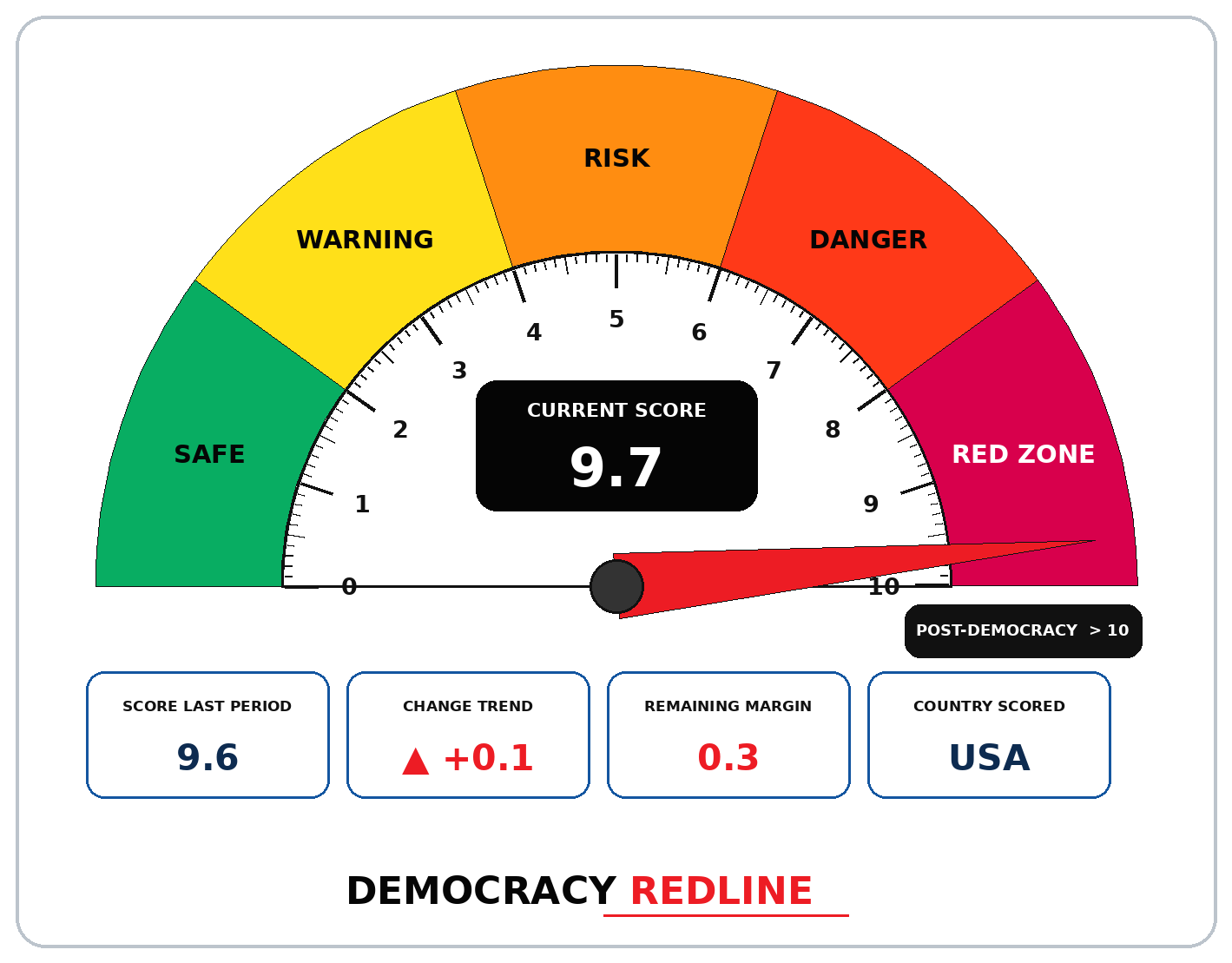
America’s democratic safeguards still function. But courts, civic organizations, professional officials and individual watchdogs are being forced to carry more of the burden as executive pressure converges across elections, justice, information, detention, war powers and congressional oversight. The Democracy Redline Index has reached 9.7.
September leaves only 0.3 before the redline. The score rose because deterioration continued in seven categories while institutional oversight and coercive-power risks intensified most.
Postal rules, citizenship databases, equipment inquiries and federal monitoring created multiple paths for intervention before and after the midterms.
Courts still constrained power, but increasingly had to determine whether agencies obeyed prior orders or revived blocked policies in new forms.
Iran hostilities, disclosure disputes, executive secrecy and dormant tariff authority widened the gap between congressional voice and congressional power.
State and local officials still administer elections. Courts continue issuing enforceable relief. Civil society remains capable of organizing and winning cases. Independent journalism persists. Uniformed military leadership rejected polling-place deployments and ballot seizures.
The most serious development is not one spectacular rupture. It is the transfer of constitutional responsibility away from ordinary internal restraint and toward external actors forced to intervene after executive action has already begun.
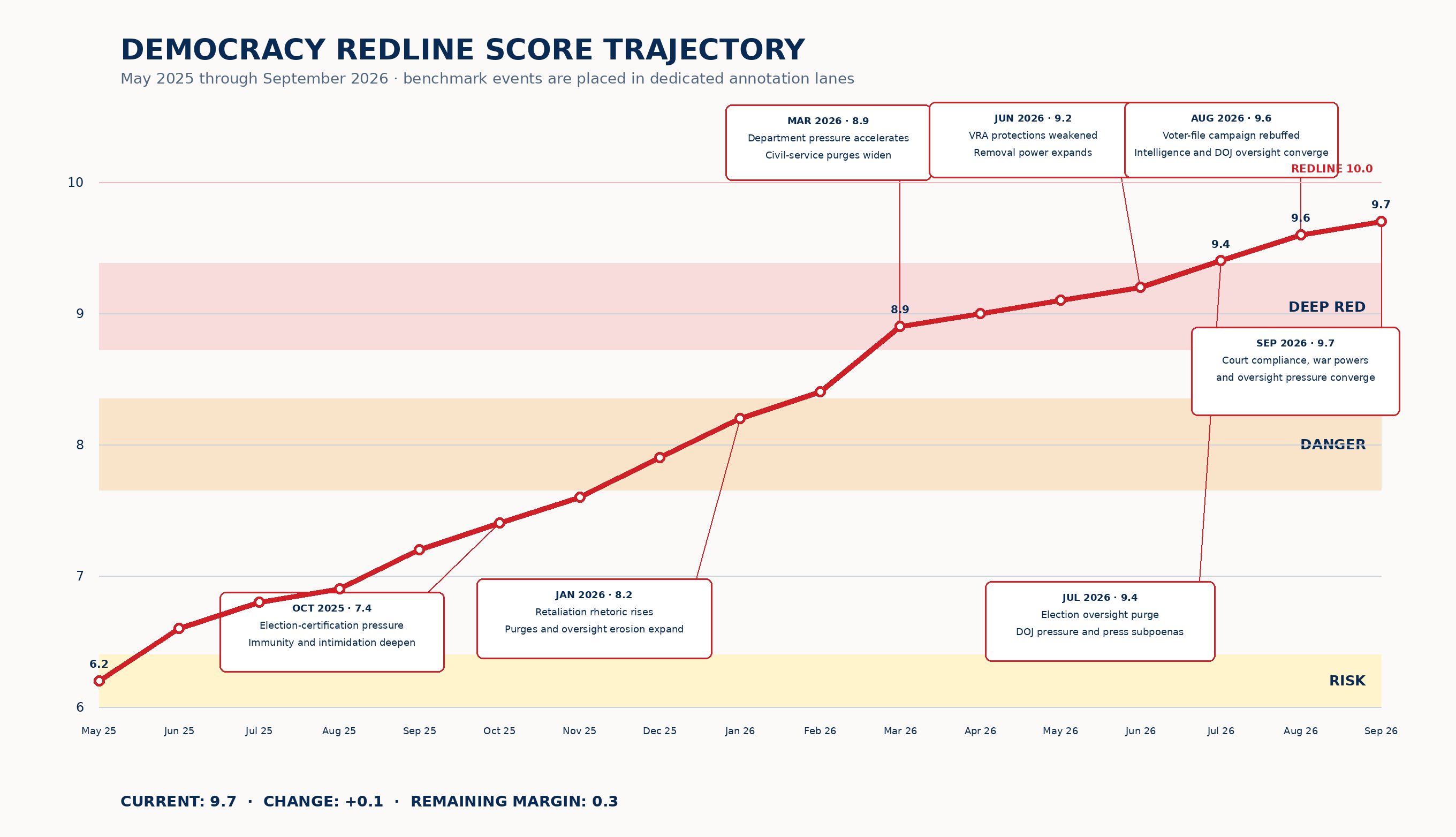
The warning has risen from 6.2 in May 2025 to 9.7 in September 2026.
An independent monthly warning system tracking democratic stress in the United States.